
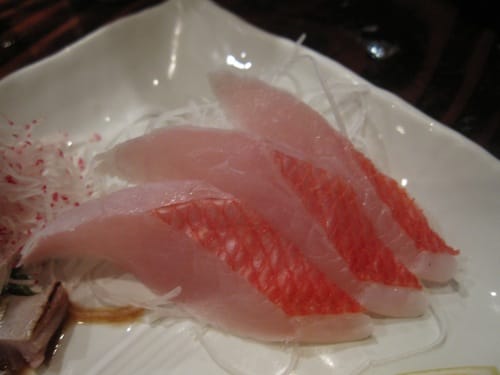
It started with a list. My five picks for the Top L.A. Japanese restaurants appeared on NBC’s bygone Feast website in March, 2011, and included places like Urasawa, Torihei and Otafuku. Tokyo-born Tomo Kurokawa e-mailed, implying that it was time to dig deeper. And dig we did, along with fellow friend Bill Esparza. Our initial meal was at Kiriko, a sushi-focused restaurant that Tokyo-born chef Ken Namba opened to end the 20th Century. After moving to L.A., Tomo started taking bi-monthly trips to Kiriko, a small establishment on the Sawtelle side of the Olympic Collection.
Tomo said that the name Kiriko refers to the style of decorative etchings on sake glasses. We sat at the pine bar, lit by mismatched lanterns, and enjoyed a good meal (and of course sake).
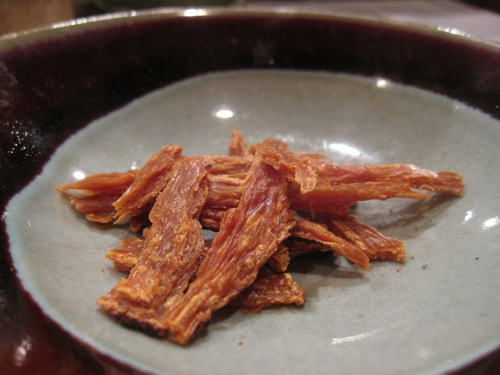
Tomo brought back prized ingredients from her travels home, including sea cucumber ovaries, which arrived in a packet, formed into a red triangle. Chef Namba toasted them over an open flame until they became charred, chewy, and jerky like. This could become a bar snack. Well, maybe not.
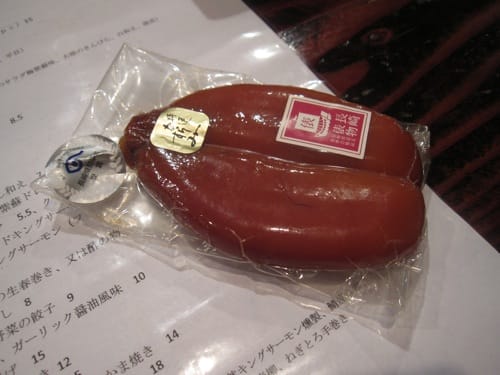
Mullet roe was Tomo’s other mystery item.
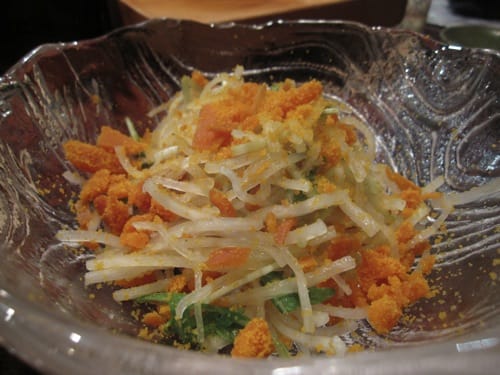
Chef Namba combined the crumbly mullet roe with jicama to form a salad.
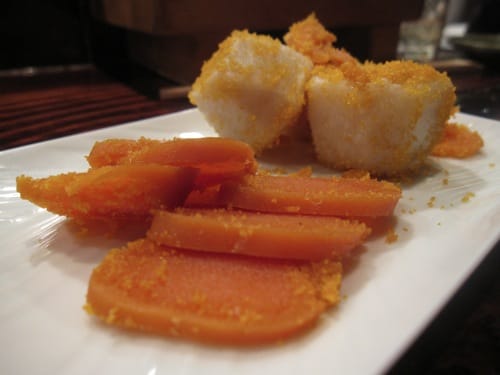
Even better was his sliced roe with chunks of firm, earthy taro, showered with grated roe.
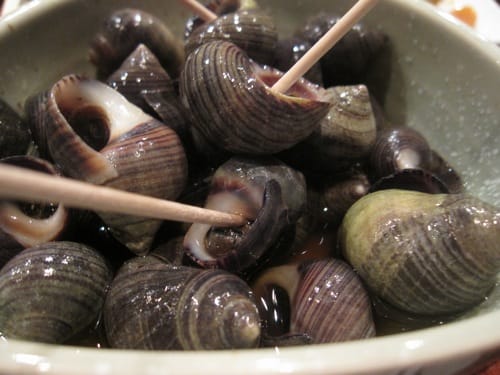
Sea snails seasoned with subtly sweet mix of sake, sugar and mirin posed a fun challenge, as we had to use toothpicks to groove long and winding snails from their houses.
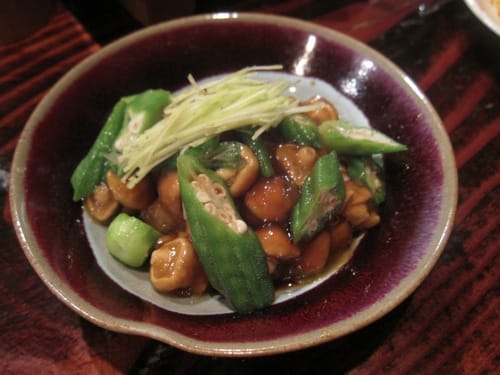
Tiny mushrooms appeared with okra and fresh shaved wasabi, which isn’t as spicy as the standard horseradish substitute. Tomo said they like to layer slimy on slimy in Japan, and this was a good example.
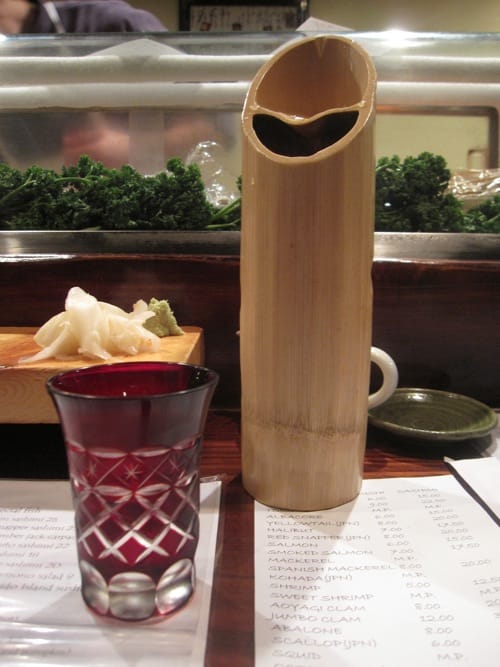
Hakkasan junmai daiginjo, a food friendly sake from northeastern Japan, arrived in a bamboo vessel. Daiginjo means that they polish up to 50% of the contributing rice grains, resulting in a smooth sip.
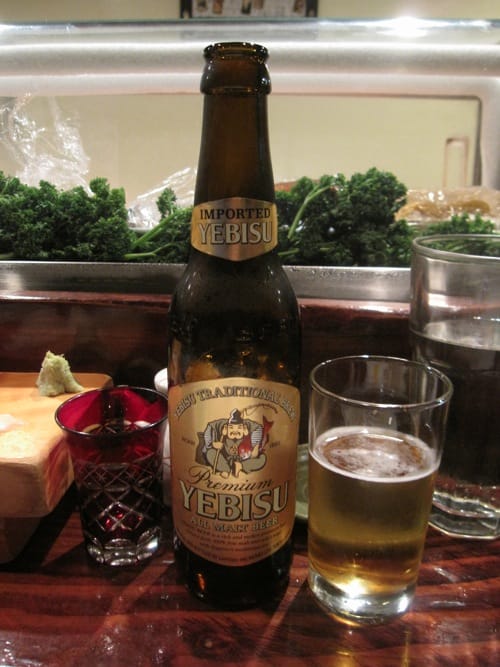
Of course the sipping didn’t stop with sake. We also ordered malty Yebisu beer.
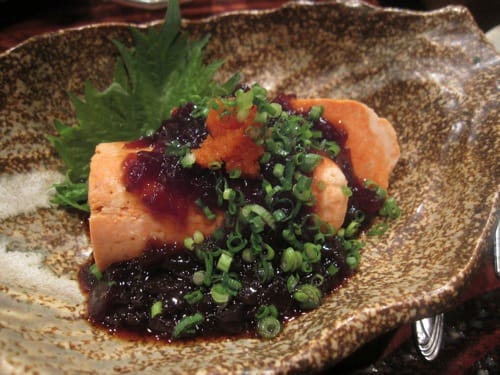
Creamy slabs of monkfish liver appeared with cool ponzu gelee. Thick savory Smucker’s.
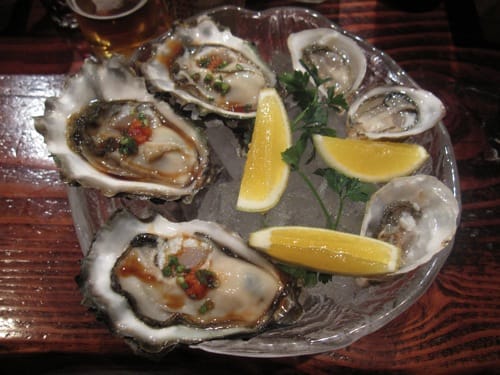
We continued with a small Kusshi oyster from British Columbia, served au natural, and Hama Hama from Washington, dressed with gelee-free ponzu, scallions and chile’d mashed daikon.
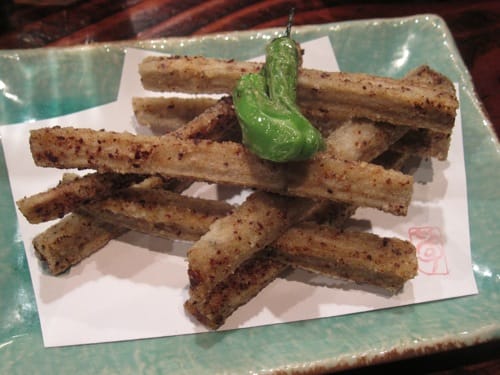
They presented fried gobo root ($5.50) like fibrous Lincoln logs, but my logs never sported chile-flecked panko or blistered shishito peppers growing up. This was a serious improvement.
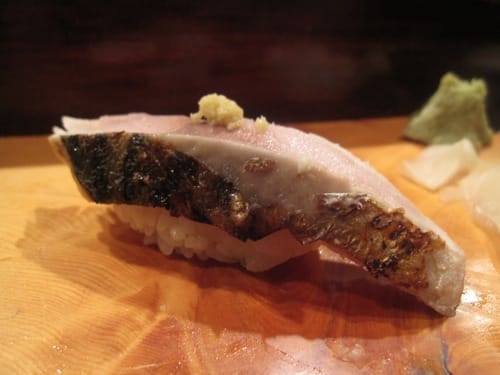
Japanese Mackerel Sushi had silver skin, rich natural oils and concentrated ocean flavor.
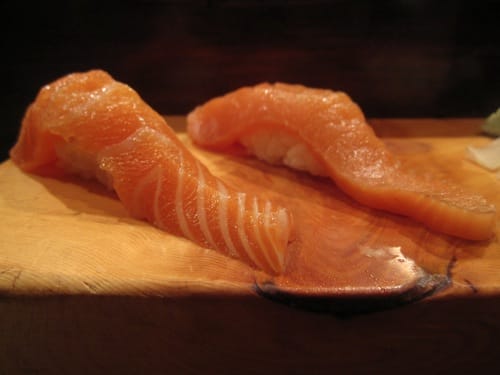
One of my favorite courses featured salmon two ways. Silky, buttery salmon ($6) appeared with a dab of wasabi and received a quick dip in soy. Cherry wood smoked salmon ($7), smoked the day before, had more sweetness, and of course a hint of smoke.



Blog Comments
Greg
August 12, 2012 at 10:41 AM
You might want to revisit this one. I will have a hard time taking your reviews seriously after last nights dinner of very average sushi for $400 for 2.
Joshua Lurie
August 12, 2012 at 1:15 PM
Greg,
Kiriko would definitely not be a good value at $200 per person, but I’d be interested to hear how you arrived at that figure. We ordered almost every luxury item available, plus alcohol, and spent right about $100 per person.