
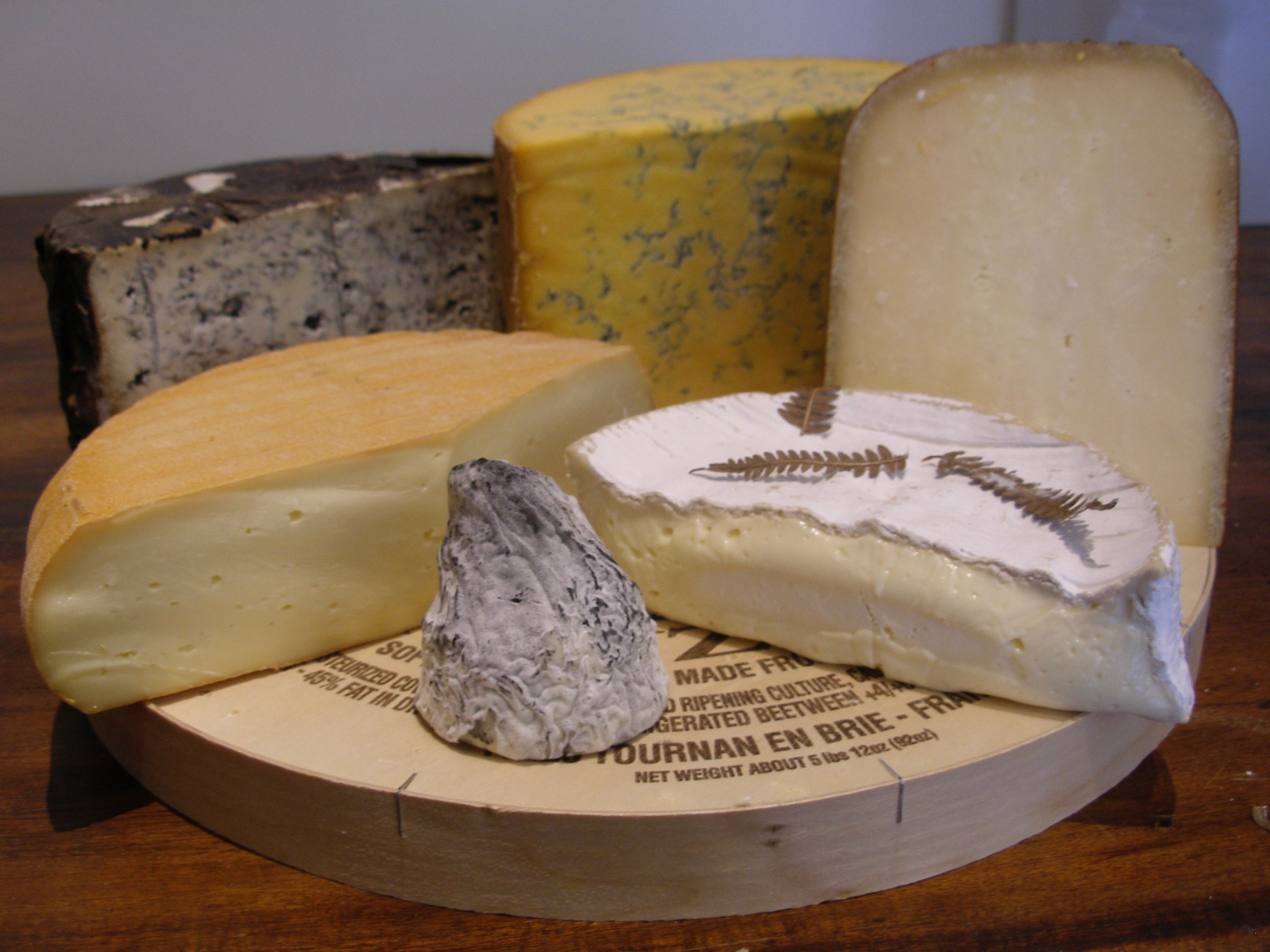
January 20 is National Cheese Lover’s Day. As a result, Andrew Steiner, the owner of Andrew’s Cheese Shop in Santa Monica, decided to dispel five cheese myths. These are some of the misconceptions that Steiner discusses on a monthly basis in his popular “Cheese 101” class. “I want to help people understand the basics of cheese,” says Steiner. “The more you learn, the more fun you can have trying new tastes and expanding your palate.”
1. Any soft cheese with a white rind is called “Brie.”
“Brie is not just a cheese, it’s a region in northern France,” says Steiner. “Much like the wine industry, the French government has extremely strict regulations concerning region and cheese production…Camembert has to come from Camembert [and] Roquefort comes from Roquefort.”
2. Unpasteurized cheeses are illegal in the United States.
“Most small production, artisanal cheeses that you will find in good cheese shops are unpasteurized,” says Steiner, “and a high percentage of hard and blue cheeses are unpasteurized. There are also a large number of American cheesemakers who use raw milk for some, if not all, of their products. Advocates of unpasteurized cheeses say that raw milk is better nutritionally because the vitamins and natural enzymes have not been destroyed by heat. The only illegal cheeses in the United States are unpasteurized cheeses that are aged for less than 60 days, as harmful bacteria may be present when the animal gives milk. After 60 days (or pasteurization) the bacteria are harmless…These bacteria are particularly harmful to fetuses, and pregnant women especially are advised to avoid them.”
3. Soft cheese is more fattening than hard cheese because it has a higher percentage of butterfat.
“If we ignore the enriched cheeses (double and triple-cremes), soft cheese does have a higher percentage butterfat,” says Steiner, “but it also has a much higher percentage of water content (up to 50%). Hard cheeses have virtually no water. This means that in a 4 oz. serving of a soft cheese like Brie, which has 45% butterfat, at least 2 oz. is water, and 0.9 oz. is fat (45% of the remaining 2 oz.). In a 4 oz. serving of a hard cheese like Parmigiano-Reggiano, which has 30% butterfat, 1.2 oz. is fat…The best thing you can do is to forget about all those numbers and just enjoy the cheese—in moderation, of course.”
4. Avoid cheese if you are lactose intolerant.
“Lactose, a type of sugar in milk that can cause upset stomachs, is found in low quantities in artisanal cheese, especially hard cheese,” says Steiner. “The bacteria used in the cheese-making process feast on the lactose and convert it to lactic acid and carbon dioxide. Cheeses to avoid are enriched products like double- and triple-cremes. These products have unconverted buttermilk added to the cheese to raise the fat content.”
5. Throw out any cheese that appears to be growing mold on it.
“Not so fast,” says Steiner. “Some cheeses, such as blue cheeses, cannot be made without mold, and the green or blue mold that appears on the surface is essential to creating the tart flavor within. Handmade clothbound Cheddars will usually grow some nice blue or green mold marbling in them as well. This adds depth to the flavor of the cheese. When mold forms on the outside of cheese left in your refrigerator, you can cut it off and still be fine. Other molds, however, are unhealthy. As a general rule, green, blue, and red are good colors. Purple, black or brown—do not eat it.”


Blog Comments
Topics about Cheeses » Food GPS » Blog Archive » Andrew Dispels Cheese Myths for National …
April 21, 2009 at 4:47 PM
[…] Joshua Lurie added an interesting post today on Food GPS » Blog Archive » Andrew Dispels Cheese Myths for National …Here’s a small readingJanuary 20 is National Cheese Lover’s Day. As a result, Andrew Steiner, the owner of Andrew’s Cheese Shop in Santa Monica, decided to dispel five cheese myths. These are some of the misconceptions that Steiner discusses on a monthly … […]
Cookery - Egg with Cheese (in Arabic) 2/2
January 21, 2009 at 10:12 AM
[…] Food GPS » Blog Archive » Andrew Dispels Cheese Myths for National … […]
Joshua Lurie
January 20, 2009 at 12:26 PM
Andrew Steiner deserves 100% credit for this post. They’re his words and analysis.
mattatouille
January 20, 2009 at 11:56 AM
very nice article. learned a bit more about one of my favorite foods. I went to the BH Cheese Store but only indulged in some jamon iberico ($15 for four pieces, but SO worth it)